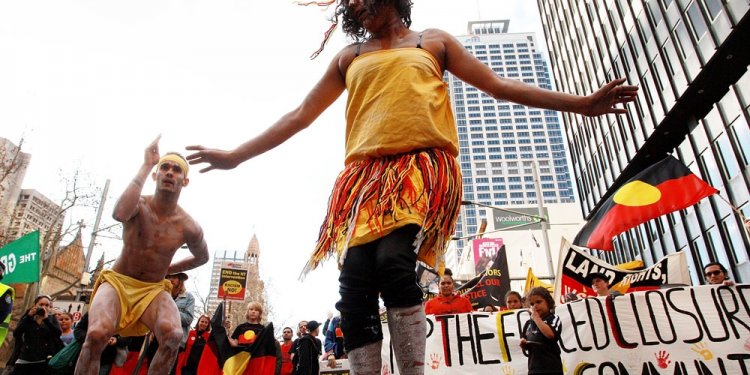
How many Aboriginal people in Australia?
1 January - Federation. The six self-governing colonies collectively become the states of the Commonwealth of Australia. The Commonwealth Constitution states "in reckoning the numbers of people... Aboriginal natives shall not be counted". It also states that the Commonwealth would legislate for any race except Aboriginal people. The states therefore retain their power over Aboriginal Affairs.
1904
The Queensland Government establishes Cherbourg, an Aboriginal community, about 30 km from Gympie.
1905
The Western Australia Aborigines Act is passed. Reserves are established, a local protector is appointed and rules governing Aboriginal employment are laid down.
1908
The Invalid and Old Age Pension Act provides social security for all Australians except Aboriginal people.
1909 -10
NSW introduces The NSW Aborigines Act following crises in public schools. Aboriginal schools are established in NSW during the early part of the 20th century. Exclusion of Aboriginal children from public schools followed requests by the European community. In NSW, there are 22 Aboriginal schools in 1910, 35 in 1920 and 40 in 1940. The syllabus stresses manual activities and the teacher is usually the reserve manager's untrained wife.
The Act also made it illegal for 'half castes' to live on reserves. In 1915 and 1918 amendments to the Act give the NSW Aborigines Protection Board greater powers to remove children for training as domestic servants.
1910
The Victorian Aborigines Act permitted the Board for Protection of Aboriginal people to help 'half castes' by licensing needy persons to live on stations.
An inquiry is held into the Forest River Massacre in the Kimberley.
The Aborigines Protection Board Act is passed which gives the Protection Board 'legal' control over Aboriginal people on stations and reserves but not missions, in the Northern Territory.
1911
The South Australian Aboriginal Act is this state's first legislation relating directly to Aboriginal people.
1912
Maternity Allowance is introduced but does not include Aboriginal people.
1916
The United Church in North Australia opens an Aboriginal mission on South Goulburn Island.
1918
The Queensland Government establishes an Aboriginal station - Palm Island - in the Palm Isles.
The Northern Territory Aboriginal Ordinance Act "ensured that Aboriginal people could not drink or possess or supply alcohol or methylated spirits, could not come within 2 chains of licensed premises, have firearms, marry non-Aborigines without permission or have sex across the colour line".
The Ordinance also forbids mining on Aboriginal Reserve Land.
1920
Groote Eylandt, in the Gulf of Carpentaria, is named an Aboriginal Reserve. A number of missions have been established here.
Share this article
Related Posts

Latest Posts


